
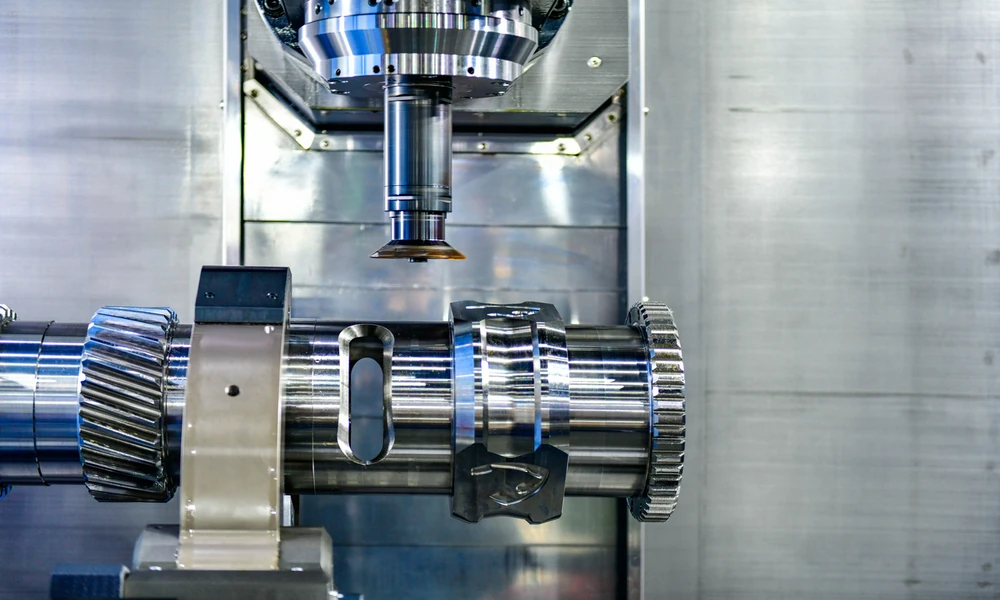
Precision matters long before final assembly begins. A tiny dimensional error can disrupt performance, increase waste, or delay production schedules. Manufacturers therefore seek machining methods delivering repeatable accuracy across varying quantities. From aerospace brackets to medical housings, every detail influences function. Companies exploring thailand precision machining often value dependable output, tighter tolerances, and production flexibility under changing market requirements.
Reliable Manufacturing Starts With Controlled Accuracy
Complex components leave little room for variation. Even minor inconsistencies create fitting issues during assembly. Precision machining addresses this challenge through programmed toolpaths and measured material removal.
A gearbox housing offers a useful example. Misaligned openings may affect operation immediately. Controlled machining keeps dimensions within specification, helping parts match intended engineering requirements across repeated production cycles.
Why Do Intricate Designs Require Advanced Machining?
Engineers often create shapes conventional methods struggle to produce. Deep cavities, narrow channels, and multi-surface features require greater control during fabrication.
When tolerances become tighter, machining capability becomes critical.
- Precise hole positioning across components
- Smooth surface finishes for contact areas
- Complex contours across multiple faces
- Consistent dimensions between production batches
Such capabilities help maintain part integrity under operating conditions.
Scaling Output Without Losing Part Consistency
Production demands rarely remain static for long. Early prototypes may require dozens of units. Successful products often require thousands.
Modern machining platforms help bridge this transition effectively. Automated processes reduce variation while preserving dimensional targets. In industrial supply chains, thailand precision machining contributes to scalable manufacturing through advanced CNC equipment, process monitoring, and rigorous inspection practices.
Consistency becomes valuable when replacement components must match original specifications years later.
Key Factors Buyers Should Evaluate
Selecting a machining partner involves more than capacity figures.
Consider:
- Equipment capability
- Inspection methods
- Material expertise
- Delivery performance records
Additional evaluation points include workforce experience and process documentation. A supplier familiar with aluminum aerospace parts may approach stainless medical components differently. Technical understanding often influences final results more than machine quantity alone.
What Separates Strong Suppliers From Average Ones?
Not every facility approaches quality with equal discipline. Strong providers track measurements throughout production rather than checking only completed batches.
Several indicators deserve attention:
- Recorded dimensional verification
- Multi-axis machining availability
- Engineering review capability
- Traceable production documentation
- Material certification management
These practices reduce uncertainty while improving confidence throughout procurement decisions.
The Value Reveals Itself During Production
A precisely machined component affects more than one workstation. Assembly teams spend less time correcting fit issues. Inventory losses decrease. Maintenance departments encounter fewer replacement concerns.
Consider a hydraulic manifold containing several intersecting passages. Accurate machining ensures fluid follows intended pathways. One overlooked deviation could influence pressure performance across an entire system. Precision therefore shapes outcomes far beyond the machining center itself.
Precision That Extends Beyond The Machine
The hydraulic manifold example highlights a larger reality. Accuracy influences flow, fit, maintenance intervals, and operational confidence. Parts produced within exact specifications create advantages long after manufacturing ends. As products become more intricate, machining quality shapes not only component performance but the reliability customers experience throughout an equipment’s working life.