
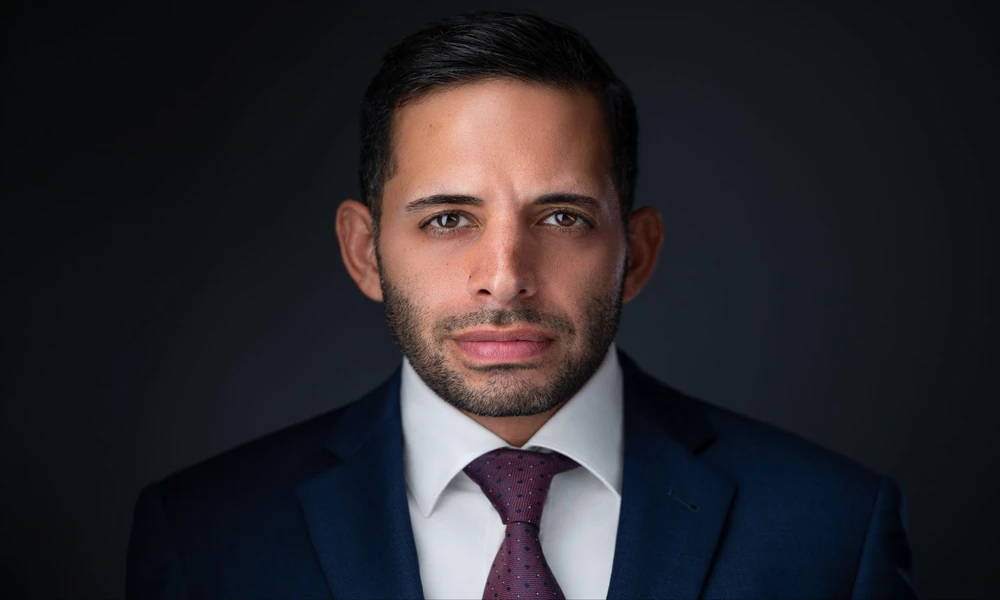
Nicholas Mukhtar’s first organization was a Detroit nonprofit. His current one is Tera Strategies, a Fort Lauderdale consulting firm that advises family offices, executives and business owners. A March 2025 release carried on Yahoo Finance revisited the partnership work that links the two.
Then: A Convener in Detroit
Mukhtar is credited in the release with pulling public agencies, businesses and neighborhood groups into shared health programs, and the release states that Healthy Detroit secured more than $100 million in funding under his leadership. Corporate sponsors were part of the mix from the start. Four years after its 2013 founding, the American Public Health Association named Healthy Detroit its National Public Health Organization of the Year.
“So I started reaching out to corporations and saying, ‘We can build them a basketball court for three thousand dollars. Let’s do this,'” Mukhtar recalled in an interview. The changes came almost overnight, he has said. He still points out parks that used to be abandoned lots.
The New York Template
Mukhtar studied at Johns Hopkins University as a Bloomberg Fellow, and the experience gave him a close look at how Michael Bloomberg’s administration had worked in New York City. He points to the public-private partnership the city formed around its health department. “They recognized that government institutions are big bureaucratic machines not equipped for innovation,” he said.
New York’s answer, in his account, was a nonprofit arm separate from government and bound by a formal partnership agreement. Mukhtar credits that structure with bringing new life to places such as Bryant Park.
Now: The Same Diagnosis, Different Clients
Tera Strategies works on governance, operations and growth planning. Mukhtar compares large, established companies to city governments that struggle to get out of their own way. Startups, in his comparison, resemble his early nonprofit. “How do you take a group of people doing 20 different roles and turn it into a real functioning business?” he asked in the same interview.
Founders, he added, should study how larger institutions got where they are, and where they went wrong along the way, before they try to build something of the same size.
Outside advisers fill the role in business that the nonprofit arm filled in New York, he argues, because they are not tied to the daily routine. That view is laid out in a Tycoonstory interview on hiring consultants.
His motive, as he describes it, has stayed constant across both careers. “I’m the type of person: when I see a problem, I want to fix it. That’s true in business, in companies, in my family, everywhere,” Mukhtar said.